I. Snapshot of the Problem
The Montagnard (or Dega, Degar) population located in North Carolina’s Piedmont is the
largest concentration of Central Highland peoples outside of Southeast Asia. Greensboro and Guilford County probably have the largest number, perhaps 10,000. Unfortunately their numbers are not overwhelming such that translated materials available to Spanish and Vietnamese speakers are also available to Montagnards. Here they are merely enough to chronically burden schools, hospitals, and other agencies with the periodic (but expensive) cost of providing translators and interpreters.
Despite their small numbers relative to North Carolina and the US, their
local numbers are concentrated and significant. Over such a long time (since 1986), one wonders why no steps have been taken by authorities to resolve the translation problem. The
lack of very basic information for the community has certainly contributed to many difficulties individual Montagnards have experienced, such as health, diet, housing, and education. The
2010 Census will reveal more accurate numbers, perhaps causing the community to demand more translation and other services. But by and large the population is apolitical about their rights and responsibilities in the US and it has no advocates in local or state politics.
Bottom Line Recommendations:
•
When scarce dollars are spent on Montagnard translations, they should be accurate. There appear to be no standards for Montagnard translation. For example, one flyer translated into Rhade omitted all diacriticals (accent marks). Another example I saw included glaring spelling errors according to two educated Montagnards I consulted.
•
Translations should be effective, otherwise why bother? Since many Montagnards can't read their spoken language, audio and video media will be far more effective than text.
• Put the costs of translation and audio and video production into the budget. Without doing this, a project's reach and impact will be severely limited. Often translation costs are a last-minute inclusion. For the Montagnard population, communication is the number one problem. Calculate communication costs early on.
• Get your money's worth. I've seen a few US pamphlets, brochures, or information sheets appear in any of their five languages. Most are one-off publications, meaning that no attempt was made to create a series of publications or an ongoing venture that could reduce costs.
____________________________
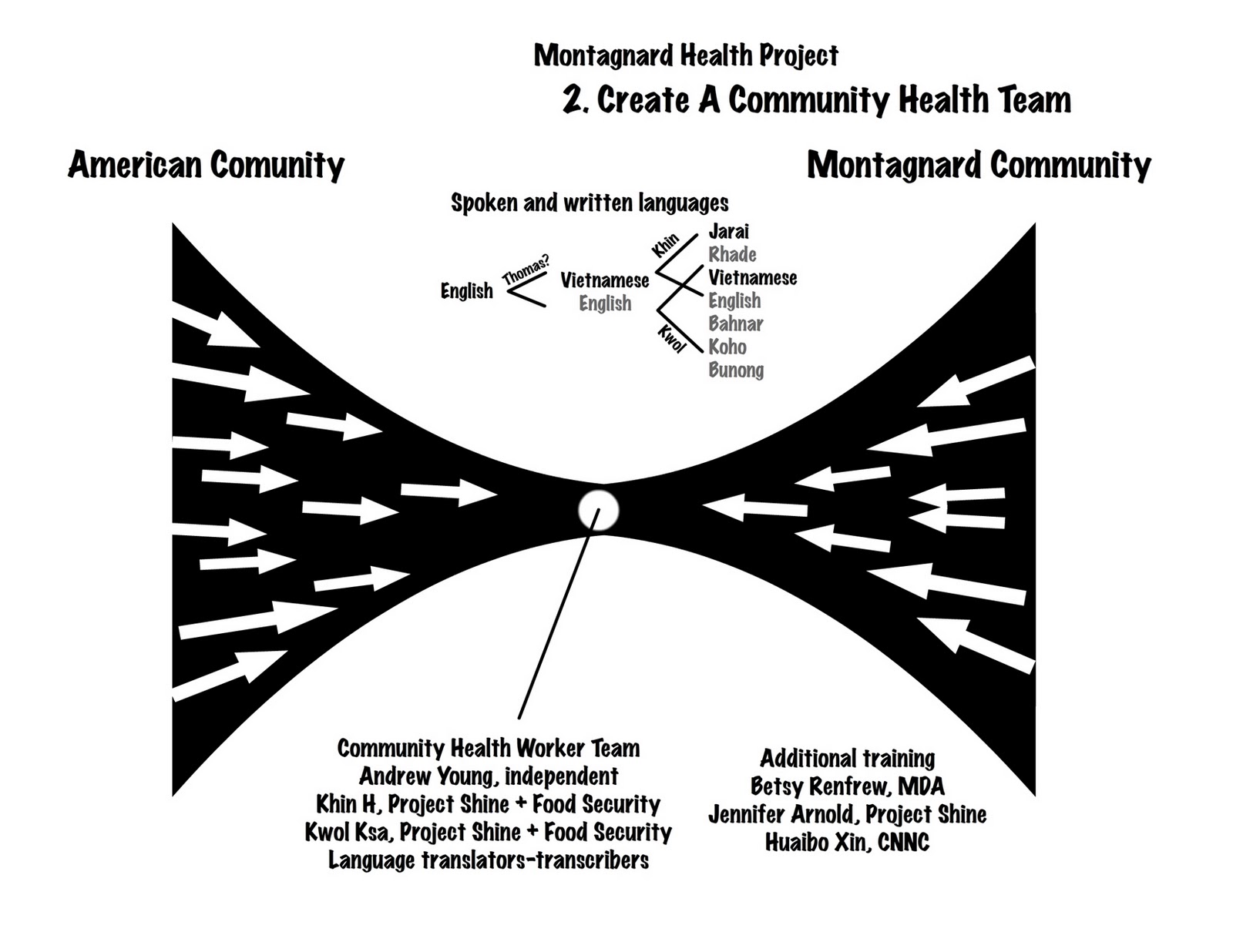
Based on my work with the Montagnard community over the past two years, I've found several cultural factors that influence the nature and form of translation work for this population. The following addresses specific language issues.
II. Cultural Factors Influencing Translation
a) Some but not all speak Vietnamese. Nonetheless, this seems to have inspired Americans to provide Vietnamese-translated literature as a solution. They often don't realize or don't wish to acknowledge that Vietnamese is not Montagnards' primary language and may be only partially understood. So although many Montagnards might understand or appear to speak basic Vietnamese, their level of fluency, reading ability and comprehension is directly related to their association with Vietnamese speakers or education they received in Vietnam. So a cautionary note: Few Montagnards have completed high school. Most appear to have less than six years of formal schooling. Some have had only one or two years, or none.
Presumably, such views should be respected. All Montagnards see themselves as culturally distinct from ethnic Vietnamese. Some fought for the US during the Vietnam War, organized into distinct units. The ethnic and linguistic history of the Montagnards clearly supports their position.
d) Many Montagnards are preliterate, meaning they received only a few years of education and cannot read their own spoken language.
This is certainly not true for all Montagnards, the oldest of which often were formally schooled and received advanced training, but it does suggest the importance of audio and video messages over written texts.
e) Older Montagnards (45+) generally know many Montagnard languages, Vietnamese and may even know Thai, Cambodian, Laotian. Rarely, they will know French and even some Chinese. Younger adults tend to know their primary language and some Vietnamese. Those born in Vietnam but raised here may only know English and their parents' primary language. This is certainly true for those Montagnard Americans born in the US.
Most adults value their language as an expression of their identity and culture, even if they write it poorly or haltingly. Those with the strongest language skills and most able to produce authoritative translations are rapidly aging. Translation work should be done now, while the most able and skilled are interested and active.
f) There are certain technical or other terms for which there are no equivalents in Montagnard languages. Translators seek good compromises with explanatory text as needed. It appears that the best translations tend to be wordy; the translator prefers to indulge in lengthy explanation rather than risk brevity and misunderstanding.
g) Most Montagnards are multilingual when most Americans are monolingual. English is a difficult language to learn for almost everyone who wasn't introduced to it when they were young, so the slowness they have in picking up the language has more to do with cultural isolation than inherent skill. Increasing the amount of translated material available to them should be considered part of a larger effort to break cultural and linguistic isolation.
____________________________
The following seeks to establish some guidelines for policy makers, officials, project managers, grant writers, etc. Because I advocate for audio and video production in addition to standard translation, I've expanded on these points, including some info on costs.
III. General Guidelines
1. In the 2010 Census, the Montagnard community agreed to check "Other Asian" and write in "Montagnard" to ethnically identify themselves. Leaders agreed they consider themselves first and foremost Montagnards, and only afterward by their tribal and language identity (Koho, Jarai, etc). So whether they ever invoke Title 6 of the 1964 Civil Rights Act to obtain more translation services, it seems Montagnard Americans will have successfully established an official identity in the greater American population.
This would seem to have looming implications for American authorities.
2. American authorities and agencies must
A) Commit to qualitative standards when translating Montagnard languages. This includes inclusion of diacriticals (accent marks).
B) Include translation and media production costs into grants, projects and undertakings involving the Montagnard community if they wish to effectively communicate. Live translation is expensive and requires advanced scheduling. Audio and video messaging can help deliver important information. Text-based information is least effective.
3. Vietnamese should not be offered as a substitute for the Montagnard languages to Montagnards by American authorities (anymore than they should be offered Spanish, Russian, or German!).
4. Ideally, a Montagnard Koho should be provided with Koho-translated information. Reasonable, sincere efforts should be made to provide this and the other four languages.
Most Montagnards agree that Rhade will be reliably understood by Jarai speakers. Some Rhade speakers refer to Rhade as the “Montagnard language", but it's clear that not all Montagnards understand it. We need more discussion and feedback if we want to prioritize language translations. There is no reliable data on language breakdowns in the Montagnard American population to guide us.
5. Expanded definition of “translation”. Making translated information available to Montagnards means the availability of
• written text translation,
• audio translation, and
• depending on the content, video presentation.
Only making text information available is bound to be insufficient and ineffective, as history has proven.
6. Written text. Although many users do not read, written text is the definitive data source on which we base audio and video versions. A text version is valuable for scholarly and comparative purposes, for building a database, and for repurposing information —an important factor in eventually reducing translation and production time and associated costs.
It probably has yet another valuable reason for being: The compilation of enough texts would serve as the raw material for native language classes, something educated Montagnards have attempted in the past. For many, they fear their children will forget their native language. For the Montagnards, many of whom must rely on memory, having written texts would be a way of assuring them that their culture will not be lost over time. If you’re looking for the assistance of the Montagnard leadership to help produce translations, the cultural preservation of language is a powerful influencer.
7. Translated audio. Recorded audio messages in translation can overcome the language barrier and is the surest way of clear communication, short of expensive face-to-face delivery by another native speaker.
8. Video format. Information should be produced in video English and translated video where the video medium will enhance the user's understanding. Video costs, like all things digital, have come down tremendously. Consider augmenting audio recordings with video, especially if the listener is learning something new, since the more engaged a learner's senses are, the more likely she'll remember the lesson. And, it doesn't cost much more to create video once text and audio clips are in existence — so might as well do all three formats together.
9. Delivery
• Text, which can be printed, copied, easily carried and edited, is very cheap but historically inaccessible to most Montagnards, even when the text is in their native language.
• Audio requires a delivery device. Most Montagnards own cell phones which could be used to deliver translated recordings. AM and FM radio are limited by range and require an FCC license. Podcasting and Web radio require Internet access, which many Montagnards have access to through their children or friends. Internet access through Wi-Fi devices such as netbooks, laptops, and other hand held devices is a relatively inexpensive method for delivery. Downloading audio onto cheap MP3 players and periodically updating them is another.
• Video delivery is also theoretically possible through cellphones, easier with the latest high-end devices such as iPhones or iPod Touches, via YouTube or Quicktime. Netbooks, laptops, and desktop computers all have video delivery capability but would require Web access with broadband to be worth it.
10. Notes on comparative costs. Live translation costs vary. A three-way telephone translation is usually available in healthcare settings and costs perhaps $1.50 a minute ($90+ an hour). The cost of personal translation and interpretation help in the Montagnard community — what they charge each other — seems to be about $25 an hour for a translator to accompany an individual to a doctor or attorney's office. But community translators aren't always available since no one pursues this full time.
While it can be argued that audio delivery imposes an additional cost to the user, the presumption is that some costs are already offset because the user already owns or has access to a delivery device, or that the user is accustomed to paying a certain amount for personal translation service, or that any added costs would be made up for by superior results, ie, better, money-saving choices made by a better informed consumer.
A good example of how dollars might be better spent would be if Montagnards purchased the iPod Touch instead of the portable English-Vietnamese-Chinese hand-held translation device that sells locally for about $200 (the same as an iPod). With the iPod the user can download a free Vietnamese dictionary as well as access and store audio and video translations. If the user is within free WiFi range, she also has Internet access. The iPod is a relatively cheap but flexible media delivery system. It also has an easy interface for preliterate adults to learn.
 ___________________________
The following is intended as an outline of work steps for technical translation work and audio and video production with some notes on man-hour costs.
IV. Specs and Costs
The key to a sustainable model for translation is to reduce costs and time while maintaining quality. Computerization solves some important production and delivery issues that were not available in the past. The methods I've adopted can certainly stand improvement. I've deliberately kept to readily accessible software and methods which are relatively cheap and not especially technically difficult.
• To see examples of videos, see
http://sites.google.com/site/mdagreensboronc/census-2010
• Go to individual language links to see pdf examples.
Text
 Handwritten translation.
 A big problem but not easily avoidable if the expert does not use a computer.
 Typewritten translation.
 Better than handwritten. The translator has added diacriticals by hand. Translators check their spelling and use of accents against Bible translations.
 Edited transcription.
 A younger Montagnard was asked to review and notate the manuscript. Although she was not sure about spelling and use of diacriticals, she made suggestions about phrases that she felt would be more clearly understood.
Work Steps
1) Authoritative English text source, preferably in text (txt, rtf, etc) format
2) Goes to translator for first pass
3) Translator's draft, expect typed or handwritten
4) Draft converted to digital text
5) Diacriticals added
6) Translator proofs digital version
7) Final text approved
Audio
8) Translator reads final text; audio recorded in a program such as Audacity.
9) Audio cleaned and edited
Visuals, graphics

An early design showing Rhade and English translations side by side. Because the type size was small, I decided to go with a full screen image of the original English Census form zoomed to each question, and added the Montagnard text at the bottom of the screen.
10) Visuals (video, graphics) created in image editing program like Photoshop.
Video

11) Text, audio, and visuals imported into video editing software such iMovie.
12) Video edit
Output/delivery
13) Text output in .rtf, .doc, .pdf
14) Audio output in .mp3
15) Video output as .mov for YouTube, iPhone/iPod
A rough breakdown of production time for 1.5 pages looked like this:
Translator: 2 hours of translation
Editor: 2 hours of transcription and editing
Sound: 1 hour of audio
Video: 2 hours of video
Graphics: 1 hour of graphics
To create each version of the Census 2010 text, audio and video required about 8 man hours, or a full day of work, for about 1.5 pages of text.
Reducing costs
Designing and laying out text for a more pleasing printed version, or laying text out in a Web page is time not included in the above. Obviously graphic design and layout can enhance a finished product, but in some instances bare-bones text or minimum design will do. For the Census videos, the same design format and graphic style were used for Jarai, Bunong, Rhade and Koho, reducing costs.
To the lay person this might look like a lot of work, but compared to the pre-digital past when video cost a thousand dollar a minute,
this is cheap indeed. Digital media also has the advantage of being easily
reused and redelivered on other platforms.
Creating standalone, individual brochures and texts are expensive.
Doing bulk work and deliberately designing content to be reused can bring down costs.
Basic tools and equipment:
Laptop
Digital camera
Flip camera
Internet access
YouTube
Quicktime Pro
Audacity
iMovie
iPod Touch

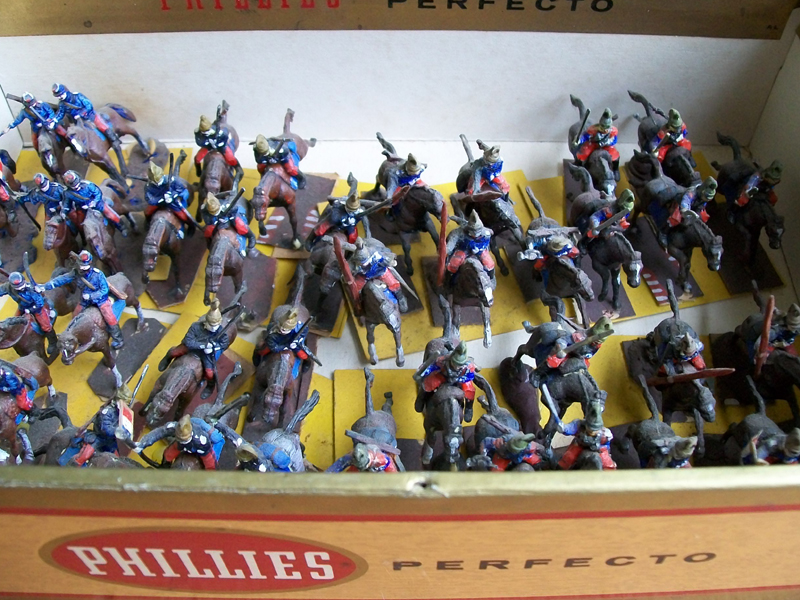
 The figures I collected were from the 1914-15 era. These wore colorful uniforms, especially the French infantry and cavalry. I also put together smaller fighting units typical of trench warfare during the 1916-18 period, but these were almost impossible to operate in any kind of interesting game.
  When I viewed the boxes of cuirassiers and dragoons, I imagined the spectacle they made long ago rather than the practicality of horsemen in modern war. Surely it was the spectacle of power and romantic notions of past Napoleonic victories that the French dredged up when they outfitted their military in 1914.
  At the height of my collection I think I had the equivalent of a French and German corps and a British division, with assorted cavalry brigades. I also had a French colonial regiment.
 Replicating battles from August 1914 presented huge problems. For all the color and mass they presented, the rules guiding any war games ended the same: huge casualties inflicted from afar by a few machine guns and field pieces.
  First World War games defied rules and dice rolls that sought to determine morale. After fifty percent casualties, what was the point of calculating morale?
 I'm not sure why I became interested in the era. First World War was clearly a modern war, but it seemed guided by very old ideas, hopes and assumptions. Even though it was extensively photographed, it was hard to visualize. Men ran forward with bayonets they would never use and wore hats that had no practical value against bullets. The only serious items appeared to be gigantic artillery weapons and industrial machine guns.
 For me, war games were less about games and more about translating modern war into something I could grapple with. It provided me with a way of crudely analyzing abstractions like morale and horror.
  I also had sets of Britains Horse Guards, Life Guards, Royal Marines, and Grenadier Guards which seemed unreal, except for the military histories associated with the actual regiments they represented.