Showing posts with label weaving. Show all posts

Kubler and the Refugee Experience

The survival of the native languages is only an apparent exception to the rule of symbolic extinction.— George Kubler
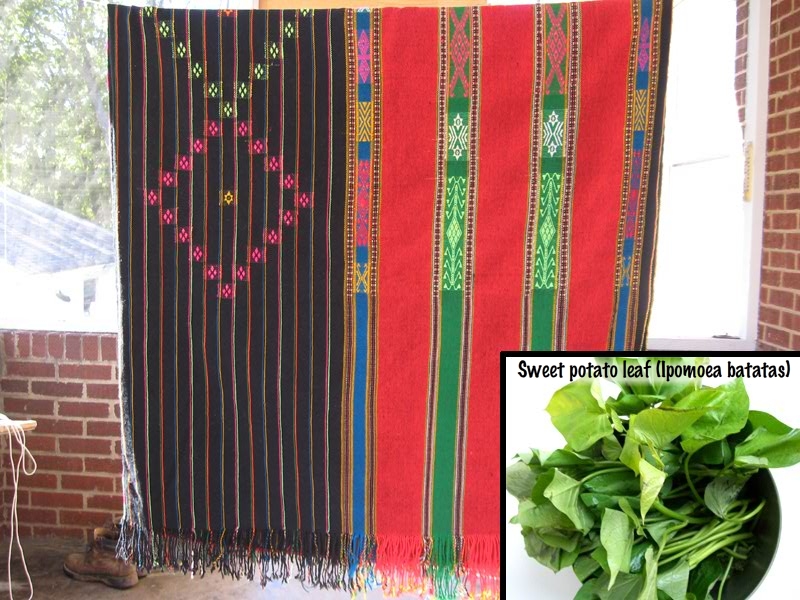
A poncho from Peru, circa 900 AD

George Kubler's Colonial Extinction of the Motifs of Pre-Columbian Art  (1961) theorizes the relationship between an overwhelmingly dominant culture as it extinguishes a weaker one. Perhaps his model can be used to understand the current situation of refugees and explain the real challenges faced by those who attempt to build, preserve and promote their communities while redirecting the power of those in the dominant culture towards reciprocal acculturation (sharing, mutual respect) and away from benign neglect, coercion, threats or force.

Kubler catalogs the responses of the weak as they salvage whatever they can of their past life while living under the constant pressure and demands of a powerful new culture. Of the five he lists, four should be avoided because they lead to the elimination of the weak by the strong.

“Convergence”, or the convergence of interests between the dominant and weak, is a matter of appearances like the trick of perspective that implies railroad tracks meet in the distance. Those in power are never threatened with face to face encounters with the weak. For the many Montagnard congregations here in the Piedmont, Christianity is an example of convergence, the appearance of shared values between themselves and mainstream churches. Both sides have reasons to maintain the illusion of a common mission but American faith-based organizations and mainstream churches have an especially big stake. They have been in the forefront of refugee resettlement in Greensboro and have recently been subjected to sharp criticism which eventually resulted in one agency quitting the region. A real encounter with all cultural obstacles removed and the playing field leveled would assign blame and reveal the current system for what it is — a mess. So what do Montagnard churches get out this? Surprisingly, they get the freedom to be left alone to tend to their people as they see fit.

Kubler uses the term “explants” to mean the brief continuation of traditional habits or activities (also non-threatening) that eventually whither under the dominant culture. Some refugees believe in the power of amulets and one was amazed that their power could work here in America, protecting its wearer from a hail of bullets during a forced house entry. But it’s unlikely the children of this refugee will share her belief. The remarkable stories of many Montagnards, especially women, are probably destined to go unnoticed and unrecorded however rich their oral culture may be, because the transition from a preliterate society to a collection of detribalized literates (to borrow from McCluhan) is consistent with  funded refugee resettlement practices. What will live on? Probably the selective stories of combat and political struggle as described by Montagnard men who fought alongside Americans and recorded by Special Forces vets who have an interest in the shaping and retelling of these tales. (Notice that the illustration at the end of this entry depicting a Montagnard crossbow breaks with this narrative, suggesting some Montagnards were attacking American forces.)

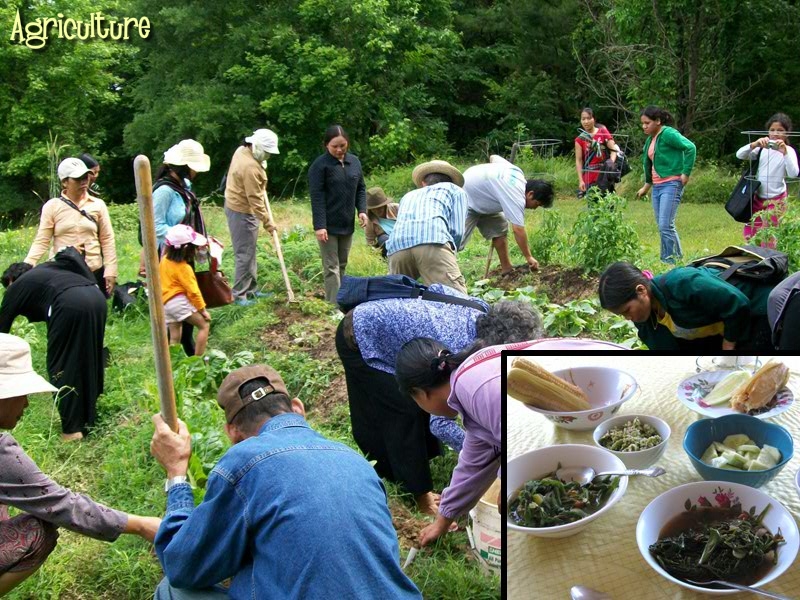
“Transplants” represent isolated pieces from the weaker culture transplanted into the “soil” of the dominant culture. In the Montagnard community, this literally means growing kabocha squash, bitter melon or water spinach in Greensboro backyards or in buckets and boxes arranged to catch sunlight in the city's rundown apartment complexes. None of these vegetables are in the normal American diet and refugees’ little garden plots are rarely considered a threat to American norms. If local mainstream residents ever discover the healthy benefits of eating a more diversified, locally grown supply of food (that is, if it ever becomes “hip” in Greensboro to eat Thai eggplant, squash tendrils, etc.) then transplanted habits might “take” more firmly in Piedmont dirt. Today the reality is different. Chronic diseases caused by poor diet and lack of exercise plague the Montagnard population, whose health stats more and more resemble mainstream Americans’.

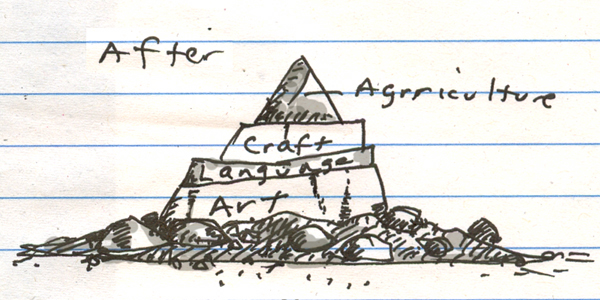
“Fragments” are distantly remembered forms and ideas that might be traced and retraced by survivors who have forgotten their symbolic meaning. Music and the arts can fall into this category. Refugee kids might mouth the words but not understand the context of songs. Weavers might create patterns but forget their origins in a world that has vanished. By Kubler's definition Art, which we tend to associate with reinvention and renewal, instead becomes the signpost of a downward spiral, pointing to the death of a culture. We're reminded of a textile expert who told us traditional weavers in Southeast Asia are dying out as traditional forms and symbols become industrialized, commercialized and sold us tourist items. Here in the Piedmont we see mostly old women, master weavers, with no pupils to inspire. Dock Rmah and Y Suk Bukrong are both skilled traditional musicians who are uncertain who will follow them. Maybe young artists like the rapper Mondega can spark a turnaround by initiating a dialog between generations.


Only the fifth response Kubler cites, “juxaposition”, offers the slim possibility of an intact survival of old ways. Reciprocal acculturation “of which there are very few examples in the history of Christianity” means a policy of listening to the needs and interests of refugee communities and working with them to create joint solutions, even while power disparities remain starkly drawn. A recent suggestion to locate a refugee welcome center at a popular international shopping complex was an example of accommodation in the spirit of juxtaposition. Its quick rejection by refugee resettlement specialists suggests that power, not collaboration or cooperation, continue to underly and guide most decision making about refugees in the Piedmont.

LEARNING FROM KUBLER: WHENEVER REFUGEES SUCCEED IN 
ALTERING AMERICAN BEHAVIOR, THEY HAVE THE CHANCE TO 
PRESERVE IMPORTANT PARTS OF THEIR CULTURE.

Agriculturist to agriculturist: An American farmer 
and ESOL teacher works alongside his students at 
community garden.

Refugee farmers learn about “lasagna gardening”...

... And quickly adopt their skills.

This team started a new community garden in a 
single morning.

International sustainability: Refugee farmers 
attended a Carolina Farm Stewardship Association 
conference on best practices and organic techniques.

Woman to woman: A university researcher is 
shown various food products by refugee women 
at their local ethnic store.

Artist to artist: Montagnard artist shares his portfolio 
on an iPod with a Canadian performance artist.

Artist to artists: A traditional Montagnard musician 
demonstrates before American student artists and musicians.

Youth to youth: University art students Skype with 
rapper Mondega (right), voted MTV Iggy Artist of 
the Week in December 2010.

An Amerasian learns how to tell her life story
 through digital media.

While video documenting a traditional recipe to 
students, a Montagnard woman connects her farm, 
her escape into the jungle, her relationship to 
her mother and the importance of food in her life. 

Electronic media used by refugees from oral societies to 
record their trip to UNCSA. McCluhan would approve.

Craftswomen meet: Two master weavers meet with 
an Australian expert and North Carolina fabric artists.

A Montagnard mom shares her spinning technique.

Communicating by doing. A master weaver from 
Vietnam with only rudimentary English skill
shows women weavers from Bhutan how to transfer 
the warp to the loom. A shared passion to continue 
their craft brought these women together.

Public health grad students interview a community health worker.


Lay health workers help a university
researcher to conduct interviews.

A lay health worker who never received formal
schooling in her country discusses emergency 
planning with her community.

Multilingualism versus ESOL. The celebration of 
the sounds of languages from oral societies. Many 
Montagnards speak 3, 4, 5 or 6 languages.
Translation of Census 2010 paid by a grant from the 
Southern Coalition for Social Justice.

The opening of the largest Montagnard-owned 
store attracted hundreds of neighbors including 
African-Americans, Latinos, and Asians to share 
food and music.

Kitchen to kitchen: A collaboration between refugee 
and American chefs to produce a new dish reflecting 
each chef's food traditions.

An American chef, immigrant chef, and Bhutanese
refugee mom create a collaborative dish.

Refugee and American chefs share the stage.

 
Iraq meets America: A group effort

 Food as a medium for communication. 
The interviewer is a blogger and media 
specialist. The respondent is a refugee
who rarely has the opportunity to share 
her culture with mainstream Americans.


Public presentation of collaborative dishes in Winston-Salem.

Kubler goes on to explain which bits and pieces are likely to survive cultural cataclysm. In the example of the destruction by the Spaniards of native American culture, he dashes hopes for finding evidence of surviving old customs — so fast, powerful and complete was the overthrow of traditional life. As we consider today how modernity and consumerism have swiftly crushed traditional peoples, Kubler the forensic investigator details the process of destruction and where to look for remains. Original religious beliefs are first to collapse, followed by the arts, then symbolic knowledge such as language. Crafts are rarely viewed by the dominant culture to be a threat and so will persist for a longer period of time. Local agricultural knowledge may be too useful to entirely disappear. Applied to Montagnard culture, we see Kubler's model at work. Christianity replaced traditional religion after decades of war and dislocation and by the late 1960s seems to have been firmly in place, well before refugees began to arrive in the US. Today few women know how to weave and only some recall how to play traditional instruments. The pressures to learn English quickly upon their arrival here in the US cause many parents to worry their children will forget their tribal language. As they punch the clock at the start of their shift at the poultry plant, they may recall their lives as agriculturalists, skilled foragers and farmers with some remaining knowledge about raising plants and caring for animals.

Then they will be Americans. Then they will be just like us. By current standards, this is success.

Culture raffle today. “Apparently there is nothing that cannot happen.” — Mark Twain

The antidote to Kubler’s devastating assessment of Spanish power in the New World is the plea by anthropologist Wade Davis to regard traditional people not as failed attempts to be like us, but rather to see them as equals faced with the same profound questions about what it means to be human. McCluhan specifically identifies artists as specialists able to deal with and respond to collapse, change, and revolutionary technologies. And it is they who most easily connect to the refugee experience because they are attuned to the fundamental cultural struggle they're engaged in. For these reasons, we have supported direct exchanges between refugee and mainstream creatives and artists. To reconsider the presence of thousands of refugees who now call Greensboro or Guilford County their home in this light would be to reconsider the policies and practices that treat them as social problems. It would make us question the agencies that carry out these policies under the banner of faith (or limited budgets) and ask if there are not better models for community building and dialog?

Southeast Asian Bob becomes American Bob, courtesy of Face of the Future

Weaving as a Language Medium

As usual, kids “get it” and are able to bridge the language gap.

MAKING WEAVING THE MEDIUM of conversation and interest instead of the English language reframes our ideas about language learning and what is effective communication. At the Goat Lady opening and at Glenwood neighborhood's Glenfest, women weavers with very rudimentary English skills were able to interact and engage with visiting Americans and sell their wares.

Goat Lady Dairy's Open Farm was an opportunity for three Montagnard women from the Rhade, Bahnar and Bunong tribes to demonstrate their weaving expertise and to interact with American visitors. One is a master weaver who has been here for many years but had only spoken haltingly and with no confidence. Another arrived in the US about a year ago and has only recently been attending weaving meetings, getting out to join her husband working at Goat Lady and coming to MDA ESOL classes. A third has been here about a year, is a dedicated weaver, and comes to MDA ESOL classes and is a regular at weaving meetings.

What drives these women when they're given a chance to express themselves through their art and other meaningful cultural activities? Below is a photo I snapped of one woman who'd just gotten her loom the day before, happily weaving after having attached the loom to a heavy TV set. For one, these are values they believe and they're confident in. They want to talk about and share them. They want to explain complex processes and problems, designs and ideas. In this context, learning English becomes less of a trial, less of a problem, and less of yet another burden they must assume during their "adjustment" to American life.

Such approaches to ESOL and language acquisition aren't meant to do away with traditional ESOL classrooms. What we're trying to show is that communication is a partnership. If Americans really want refugees like the Montagnards to learn English more quickly, then we should also engage them about their interests and from their perspective. Language is fundamentally about expression. It does not have to be exclusively about filling out job forms and reading traffic signs.

This is not rocket science. Artists and musicians and designers have been communicating across language barriers and different cultures for thousands of years. You could say this is our specialty. Still, it makes you wonder why the arts and cultural pursuits are at the bottom of refugee resettlement concerns.

At the end of the page is a simple reader we created for these women, with pictures and recorded audio for them to use for practice while weaving, washing dishes and working around the house.

No language barrier here.

Setting up in the middle of the sidewalk did not require seeking “permission” 
— an almost perpetual state of mind for some refugees who have preferred to avoid 
contact with Americans .

When interested people recognize the passions of one another,
 they share strong reasons to engage and communicate.

This refugee mom could be doing a lot of other things besides weaving, but 
because this is what she's chosen to do, we want to support it and build on her 
interest by introducing an English text that reflects her knowledge. 


Culture First


9. Cultural Preservation Working closely with partner Betsy Renfrew, and Pastor Y Hin, we are developing a project to help refugee women from Southeast Asian preserve backstrap weaving and promote its practice.
     • Kubler and the Refugee Experience
     • Backstrap Weavers Web site
     • Ju Nie at the Green Hill Center Winter Show 
     • A Spring 2011 project with UNC School of the Arts digital media classes

Montagnard community members have kept copies of historical information. Along with other existing translated texts, these could form the raw material for native language classes, an interest expressed by leaders.
     • A 1939 Rhade Primer
     • A Vietnam War-era Bunong phrase book

Visual memory can also help preserve the past.
      • See Chram's drawings

Music is connected with dance.
      • A rehearsal of ching (gong) players before the Dega Weatherspoon event.

American vets who supported resettlement of Montagnards are getting older and may be interested in looking back at their shared past and considering the future of the Montagnard American community.
     • We've just started making contacts


Where's A Good Montagnard Restaurant?

OUR PECHA KUCHA NIGHT AT DATS 2010
October 9, 2010 
Milton Rhodes Center for the Arts, Sawtooth, Winston-Salem

Pecha kucha is a slide presentation in which the presenter shows 20 slides each of which is shown for 20 seconds. The impetus for this presentation came from our desire to give a slice of the refugee experience to a progressive, green and technological savvy audience.


(1) About three years ago we began to study the Montagnard community, working with individuals on a daily basis. When we'd ask, "Where’s a good Montagnard restaurant?" we'd get a shrug. Who'd want to eat our food? they seemed to say. 

(2) Over time we learned that the name "Montagnard" is, like the name "American Indian", a foreign invention that's stuck. Montagnards are indigenous hill people from Vietnam's Central Highlands. And they really like pumpkin. 

(3) A pause. We like to put in a pitch for young people. Here practically nobody knows anything about their culture and it makes these minority kids' lives more complicated than they need be. Guns, drugs, pregnancy and poverty are problems for which worried parents and local agencies have few answers. (PS--The kids here are all really, really nice.)

(4) Language and food were two delights of the Montagnards. They had a linguistic dexterity we envied. And what to talk about? Food. As farmers, they knew a lot about growing stuff. 

(5) We were taught how to grow rice and why you can't grow chayote here, how to dry meat and collect river snails. But we puzzled why people who could speak five or more languages would stumble over English. 

(6) We found their material culture, compared to our American clutter, blessedly compact. It seemed to consist of music and dance, backstrap weaving, agriculture and hunting. And language, which is the most portable of them all. 

(7) C, who missed his family, drew pictures of his father that describe swidden farming, or shifting cultivation, that persisted as late until American involvement in Vietnam, about 1960. 

(8) America, too, used to be a country of farmers who hunted but we don't regard this as living history. We visit that past once in a while, like we visit these re-enactors every March at Tannenbaum Park

(9) So we're startled to see N warping a loom and practicing an ancient art in her Greensboro backyard. She lives in a cramped rental with her husband. She received a French education at the close of the colonial era. She minds her own business and isn't looking for outsiders to validate her work. She's a tough old bird. 

(10) Here's what we could find out. Montagnard food is different from Vietnamese food. Half is like Vietnamese food, but the other half is Montagnard. And hot peppers are indispensable. That's what everyone we ask tells us.

(11) Greensboro was once the center of a textile revolution that transformed the region's economy and turned farmers into factory workers. They bought mill houses and could send their kids to college. By the time the last Montagnards worked at Cone Mills, maybe ten years ago, they were considered good cheap labor.

(12) Despite the Piedmont's past, there are few instances in which Montagnard and American interests intersect in the present. Isolation seems to be why Montagnards learn English slowly, not the difficulty of the language or lack of ability.

(13) The things they care about aren't what we care about. Technologies that no longer have economic value we call crafts and the IRS calls "hobbies". But to these women, it's their culture, which binds all human affairs, including house, farm, clan and community (oikonomikos, economy), into which they pour their deepest expressions, creating art through skillful technical means.

(14) We arranged for some American and Australian backstrap weavers to meet J and N. Language wasn't a problem. Everyone spoke weaving, a global technique thousands of years old. Old N was flattered. At last, she seemed to say, you bring me people I have something in common with.

(15) American refugee assistance prioritizes self-sufficiency -- staying out of the ER, learning English, filling out forms. As far as they're concerned, Montagnards know what self-sufficiency means. They spot edible plants based on their similarity to plants back home. Amaranth, for example, called here "pigweed". We see weeds, they see food.

(16) C's expertise in agriculture has engaged him in a conversation with mainstream Americans. Today he's working at Goat Lady Dairy. He and his wife will still face poverty but his kids stand a chance of making it.

(17) The man who owns this dense city backyard grows food for himself and sells the rest so he can buy what he can't make or grow himself. This is a farming model practiced in Buon Ma Thout or the rural Piedmont decades ago. It's not urban gardening but it has similarities. Who wants to reach out and start a conversation with him?

(18) Ma Ser's store is a meeting ground for people with common interests -- rice, sweet potatoes, noodles, fish, peppers, mangoes. Without those intersecting interests, the neighborhood's Southeast Asians, Africans, African-Americans and Hispanics would not gather as one.

(19) On Summit Ave the Toplois, a Montagnard Koho family, have been busy fixing up a restaurant. Would we finally see a place serving Montagnard food?

(20) Aw, nuts. Maybe one day. 

_____________________________________
 Post Script
Dran Restaurant opened in late 2010. It's in the same building that houses Miyan Toploi's legal office, across the street from Nie's store (Ama Ser). Dran features Japanese hibachi-style and Vietnamese cuisine. I asked the owner if he'd consider offering a couple Montagnard dishes. He didn't say no, but if you go, drop him a hint.

The other day we went there to try some spring rolls and Vietnamese coffee. Everything was good and the interior design made for a very pleasant, friendly feeling. The owners said they were mindful to not use MSG and to keep food healthy. Dran has modest prices. (See the menu below. Click to enlarge.)

We like food variety and we love to see our city become more and more multicultural. While you're there, visit Nie's Asian supermarket across the street and Dega Market around the corner. We support small businesses and entrepreneurs who keep working class neighborhoods alive. When people talk about buying local to support home-grown businesses, they rarely mention ethnic shop owners. Try Dran!

Dran
3113 Summit Avenue,
Greensboro, NC 27405
Phone (336) 621-0341

Washington Post story!
To read about how cool Greensboro is (well, according to one writer) and his nice mention of the Montagnard population and Dran Restaurant, click here.

Warning! Closed on Sundays!